

Best overall: FDIC’s How Money Smart Are You? Best for structured study: Khan Academy Financial Literacy. Best for household money planning: OpenLearn’s Managing my money. These free financial literacy courses for adults offer different starting points for building practical money skills in 2026.
- For free financial literacy courses for adults, FDIC’s How Money Smart Are You? is the strongest practical starting point.
- Choose Khan Academy Financial Literacy for organized study across personal finance topics.
- Choose OpenLearn’s Managing my money for household planning, with attention to its UK context.
- Ask RichMinds which program fits your family’s financial education, ownership, and community legacy goals.
Why this matters
A useful course helps you make a decision, not just recognize financial terms. You should finish a lesson able to explain a bill, compare borrowing terms, organize savings, or ask a clearer question about your household finances.
For Black families in Richmond and surrounding communities, that learning can connect everyday choices to a larger purpose: ownership and lasting family and community legacies. RichMinds connects financial education with business development and wealth-building programs; ask which program fits your family rather than assuming a national online course covers every local need.
FDIC’s How Money Smart Are You? is the best starting point for adults who want practical financial literacy lessons they can apply to everyday money decisions. Start there unless you already know you prefer a conventional course sequence or a household-planning focus.
What makes the best adult financial literacy course in 2026?
Use these criteria before choosing a course:
- Practical relevance: Lessons should connect to decisions about spending, saving, credit, borrowing, or protecting your money.
- Clear explanations: You should understand the terms without searching for a second explanation of every sentence.
- Usable structure: Choose a sequence you can follow or individual topics that answer your immediate questions.
- Household application: Look for material you can discuss with a partner, relative, or young adult in your family.
- Geographic fit: Banking, tax, retirement, and consumer-protection examples should match where you live—or be clearly separated from general principles.
- A manageable next step: The course should lead to an action you can complete, not an expectation that you fix everything at once.
The best course is not necessarily the longest. It is the one whose format and subject matter match the decision in front of you.
Free financial literacy courses at a glance
| Course | Best for | Standout feature | Key limitation |
|---|---|---|---|
| FDIC: How Money Smart Are You? | Practical, topic-by-topic learning | Interactive learning about everyday financial decisions | Independent online study does not provide personalized guidance |
| Khan Academy: Financial Literacy | Learners who prefer an organized course | Lessons and practice across personal finance topics | You must translate the learning into your own household actions |
| OpenLearn: Managing my money | Household money planning | A connected look at budgeting and personal financial decisions | UK context requires care when applying material in Virginia |
These are educational resources, not interchangeable financial services. None of the selections replaces advice tailored to a specific investment, legal, or tax situation.
1. FDIC’s How Money Smart Are You?: best for practical money skills
FDIC’s How Money Smart Are You? is an interactive financial education resource built around everyday money topics. It gives you a way to explore decisions involving banking, spending, saving, credit, and borrowing without beginning with investment terminology.
Best for: Adults who want to start with a specific money question rather than work through a long academic sequence.
The practical focus makes this the default recommendation. If a credit offer, savings decision, or household spending question brought you here, choose the relevant topic and connect the lesson to that decision.
FDIC pros
- Everyday subject matter: The topics connect directly to common household financial decisions.
- Interactive format: The learning experience asks you to engage with the material rather than only read explanations.
- Topic-based entry points: You can begin with the area that matters to you instead of treating all financial knowledge as equally urgent.
- U.S. context: The resource comes from the Federal Deposit Insurance Corporation, making it a relevant starting point for American learners.
FDIC cons
- No individual financial plan: An interactive lesson cannot evaluate your complete household situation.
- You supply the follow-through: Understanding a concept does not organize your bills, change an account, or start a family conversation for you.
Put the FDIC lesson to work
Choose one current question before opening the resource. For example: What should I compare before borrowing? What does my account statement tell me? Which expense needs closer attention?
After the lesson, write down the answer in your own words. Then identify one document or decision that needs attention. Keep sensitive account details out of shared notes.
Verdict: Choose FDIC’s How Money Smart Are You? first for practical adult financial literacy tied to everyday decisions.
2. Khan Academy Financial Literacy: best for structured study
Khan Academy Financial Literacy organizes personal finance learning into a course format with explanations and practice. It suits adults who want to build understanding across connected topics rather than address only an isolated question.
Best for: Learners who prefer a clear study path and opportunities to check their understanding.
Choose this option when you keep encountering unfamiliar financial terms and want a stronger foundation. The structure gives your learning a place to continue after the first useful lesson.
Khan Academy pros
- Organized progression: A course structure helps you decide what to study next.
- Practice alongside explanations: You can check whether you understand the material instead of relying on familiarity alone.
- Broad personal finance coverage: The course provides a starting point for learning how different money decisions connect.
- Useful for shared learning: Family members can discuss the same topic and compare explanations in their own words.
Khan Academy cons
- Study is not implementation: Completing an exercise does not create a household budget or settle a borrowing decision.
- General lessons have limits: Your employment benefits, business arrangements, and family obligations still require individual attention.
Put the Khan Academy lesson to work
Keep a short list of terms you can explain and questions you still have. Do not copy a definition and count that as understanding; describe how the term affects an actual choice.
For shared learning, ask each person to explain the same idea using a different example. If the explanations conflict, return to the lesson before acting on the concept.
Verdict: Choose Khan Academy Financial Literacy when a structured learning path matters more than a quick answer.
3. OpenLearn’s Managing my money: best for household planning
OpenLearn’s Managing my money, from The Open University, examines personal finances through a connected household lens. It is a useful option when you want to think about how budgeting and other financial decisions fit together.
Best for: Adults who want to move from scattered money tasks toward a clearer household picture.
The main qualification for Richmond readers is geography. The course uses a UK context, so separate broadly useful planning ideas from references to financial products, rules, and institutions that do not apply in Virginia.
OpenLearn pros
- Household perspective: The course encourages you to consider financial decisions together rather than as unrelated tasks.
- Connected learning: It supports reflection on how present choices relate to future needs.
- Discussion potential: Household planning provides a practical starting point for conversations about responsibilities and priorities.
OpenLearn cons
- UK-specific context: Do not transfer references to UK rules or products directly to U.S. decisions.
- Extra interpretation: American learners must distinguish general financial principles from country-specific details.
- Not a local resource: The course does not replace guidance about Richmond-area needs or Virginia-specific questions.
Put the OpenLearn lesson to work
Create two columns in your notes: general principle and local question. Put ideas about organizing spending in the first column; put questions about applicable rules or account types in the second.
This keeps a useful lesson from becoming an incorrect assumption. Confirm the local question with an appropriate U.S. source or qualified professional before making a consequential decision.
Verdict: Choose OpenLearn’s Managing my money for household planning; skip it as your first source for U.S.-specific financial rules.
Turn a course into a family learning routine
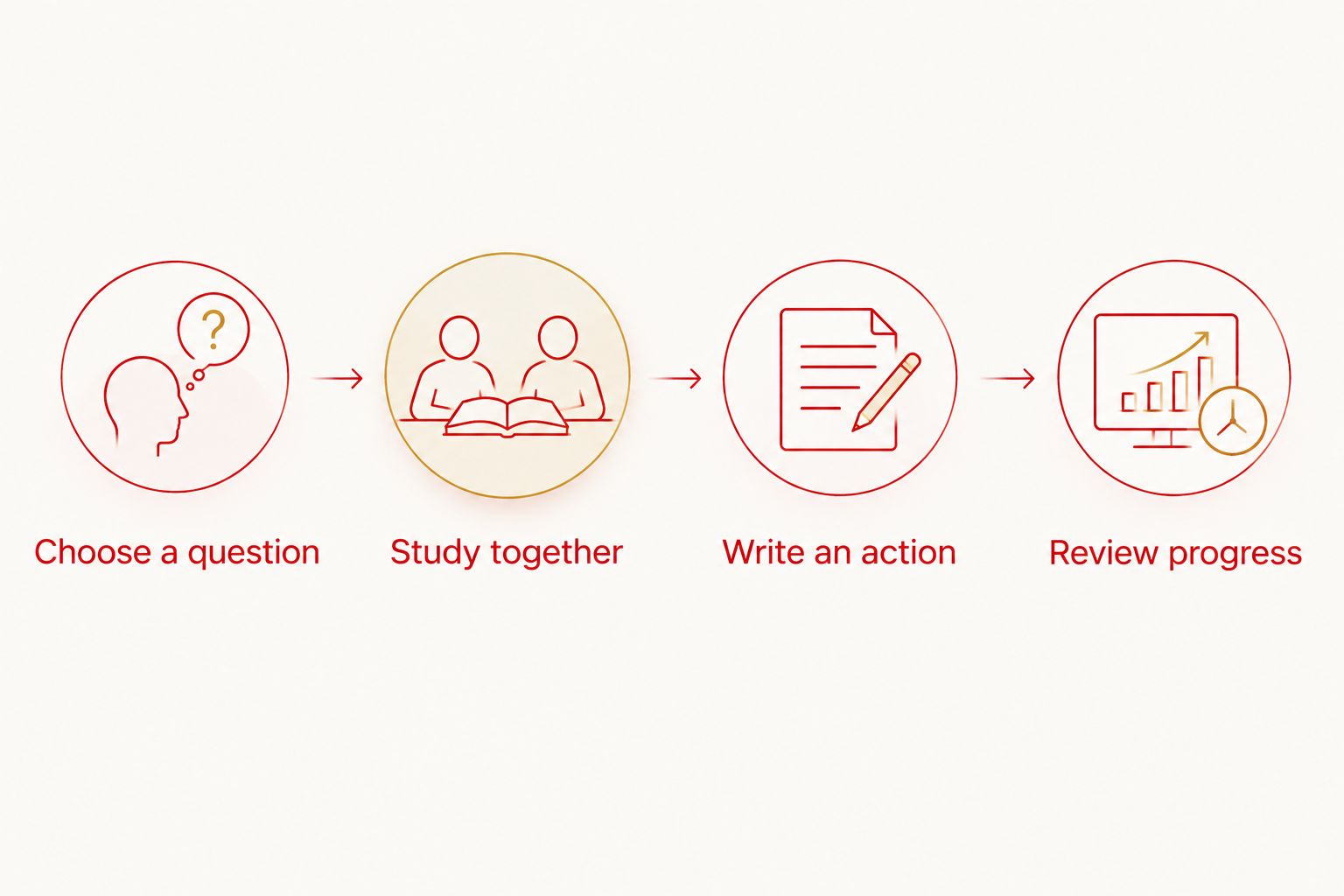
For your 2026 learning plan, choose a small repeatable process rather than collecting more courses. The following schedule is a suggested routine, not a requirement of any provider.
- Choose a question. Name one decision your household wants to understand. Keep the question narrow enough that a lesson can help answer it.
- Study together. Set aside 20 minutes for a lesson or part of a lesson. Stop to explain unfamiliar language rather than rushing to completion.
- Write an action. Use 1 worksheet to record the main idea, the next task, and who will handle it. Do not include passwords or full account numbers.
- Review progress. Return to the action after 7 days. Ask what changed, what remains unclear, and whether outside help is needed.
You do not have to share every financial detail to learn together. A family conversation can focus on comparing terms, organizing responsibilities, or understanding ownership while keeping personal balances private.
For Black families building a legacy, make room for questions about business ownership alongside household money skills. Keep those questions separate enough to identify the right kind of support.
When local support belongs beside an online course
A national course can explain a concept. A conversation about your goals helps you identify which learning opportunity to pursue next.
RichMinds’ financial education and business development focus connects family learning with Black ownership and community legacy. The organization also provides financial consulting; confirm the scope of any proposed service before deciding whether it fits your needs.
Bring these questions to the conversation:
- Which program fits our current family money questions?
- What should we understand before exploring business ownership?
- What does the program cover, and what falls outside its scope?
- What information should we prepare before participating?
The primary next step is to ask RichMinds which program fits your family. Do not assume that an online course recommendation establishes what a local program includes.
Ask which program fits your family
Discuss financial education, business development, and your family’s ownership goals with RichMinds.
How these courses are ranked
This 2026 shortlist prioritizes practical relevance, understandable explanations, usable structure, household application, and geographic fit. It is a curriculum-fit comparison, not a claim of measured learning outcomes or hands-on testing.
FDIC leads because its everyday U.S. money topics make it the clearest default. Khan Academy takes the structured-study slot, while OpenLearn serves household planning with an explicit geographic limitation.
Which financial literacy course should you choose?
Start with FDIC’s How Money Smart Are You? if you are undecided. Choose one relevant topic and attach it to one household action before beginning another course.
Choose Khan Academy Financial Literacy if you want an organized study path. Choose OpenLearn’s Managing my money if household planning is your main goal and you are prepared to separate UK examples from U.S. decisions.
For 2026, success means applying a useful idea—not finishing the largest number of lessons. Keep the course that helps you understand your next decision.
FAQ
What are the best free financial literacy courses for adults in 2026?
FDIC’s How Money Smart Are You?, Khan Academy Financial Literacy, and OpenLearn’s Managing my money are strong choices for different learning needs. Start with FDIC for practical U.S. money topics, Khan Academy for structured study, or OpenLearn for household planning with UK-context cautions.
Which financial literacy course should a beginner start with?
FDIC’s How Money Smart Are You? is the best default starting point for beginners seeking practical money skills. Choose a topic connected to a current question about spending, saving, banking, credit, or borrowing.
Is Khan Academy better than FDIC for financial literacy?
Khan Academy is the better fit for learners who want an organized course path, while FDIC is the better starting point for practical topic-based learning. Choose by learning format rather than treating either resource as universally better.
Can I use OpenLearn’s Managing my money in Virginia?
You can use OpenLearn’s Managing my money for general household-planning ideas, but its UK context limits direct application. Confirm U.S. and Virginia rules before acting on country-specific material.
How can my family study financial literacy together?
Choose one shared question, study a relevant lesson, and write down one household action. Keep sensitive financial details private and schedule a follow-up conversation to check understanding.
Does RichMinds offer the same courses listed here?
This guide lists external learning resources, not a RichMinds course catalog. Ask the organization which financial education or business development program fits your family’s goals.
Will finishing a financial literacy course guarantee wealth?
Finishing a financial literacy course does not guarantee wealth or any financial outcome. Education helps you understand decisions, but it does not remove risk or replace appropriate professional advice.
One last thing
Before choosing another course in 2026, try explaining one lesson to someone you trust without using financial jargon. If the explanation falls apart, return to that concept; if it holds together, choose a practical next action.
That is a useful foundation for lasting family and community legacies: knowledge you can explain, decisions you understand, and responsibilities you can share.
This article provides general financial education, not personalized investment, legal, or tax advice.