

Best overall: YNAB. Best for hands-on envelope budgeting: Goodbudget. Best for a shared household overview: Monarch Money. Best for tracking net worth alongside spending: Empower Personal Dashboard. The best budgeting apps for generational wealth in 2026 help you connect everyday money decisions to family goals; none replaces the work of saving, managing debt, and planning for ownership.
- YNAB leads the best budgeting apps for generational wealth for families who want to assign income before spending.
- Goodbudget suits envelope budgeting; Monarch Money suits shared oversight; Empower Personal Dashboard suits net-worth tracking.
- RichMinds connects financial education with Black ownership and community legacy; ask which program fits your family.
- Choose a budgeting method your household will maintain, then connect it to a specific ownership goal.
Why this matters
For Black families in Richmond and surrounding communities, a budget can support more than paying this month's bills. It can help you make room for education, a future home, a business, or support for the next generation. Those goals need a repeatable household process, not just an attractive dashboard.
RichMinds is best for Black families in Richmond seeking financial education connected to ownership and community legacy. Explore RichMinds and ask which program fits your family's current needs. The organization provides financial education, financial consulting, and business development programs; the apps below serve a different purpose: organizing everyday money decisions.
In 2026, choose your app around the conversation your household needs to have. If spending decisions cause friction, start with allocation. If nobody knows where the household stands, start with visibility.
What makes the best budgeting apps for generational wealth?
These criteria put family habits ahead of feature counts:
- Clear allocation: You can distinguish money for bills, flexible spending, and future goals before you spend it.
- Household participation: The people making spending decisions can understand and maintain the same plan.
- Irregular-expense planning: Annual bills, repairs, and family commitments belong in the budget before they arrive.
- Ownership visibility: You can connect monthly decisions to a home, business, education, or other family priority.
- Manageable upkeep: The app's method fits the attention your household will actually give it.
- Useful boundaries: You understand whether the app primarily manages spending, tracks balances, or does both.
No app earns a recommendation because it promises wealth. The useful question is whether it helps your family make deliberate decisions and follow through.
Budgeting apps at a glance
| App | Best for | Standout feature | Key limitation |
|---|---|---|---|
| YNAB | Assigning income before spending | A budget built around money you have | Requires regular allocation and adjustment |
| Goodbudget | Hands-on envelope budgeting | Digital envelopes for spending categories | Envelope balances need ongoing attention |
| Monarch Money | Shared household oversight | Shared access with budgeting and account tracking | A shared dashboard does not establish household decision rules |
| Empower Personal Dashboard | Net-worth tracking | Spending and investment-account visibility | Less focused on detailed, envelope-style spending decisions |
Treat this 2026 comparison as a choice between methods, not a contest for the longest feature list. Before connecting accounts, check each provider's current features, account compatibility, data practices, and cancellation terms directly.
1. YNAB: best budgeting app for assigning income before spending
YNAB organizes your budget around the money you currently have. You assign that money to categories, then adjust those assignments when circumstances change rather than treating the original plan as untouchable.
Best for: Families who want a clear decision about what each available dollar needs to do. This approach fits a household trying to balance immediate bills with a future ownership goal, because setting money aside becomes an explicit decision.
YNAB pros
- Assigning money to categories makes competing priorities visible.
- Category targets help you plan for expenses beyond the current month.
- Moving money between categories makes trade-offs explicit instead of hiding them.
YNAB cons
- The method takes practice, especially if you are used to reviewing spending only after it happens.
- Your budget still needs attention when transactions arrive or priorities change.
- A funded category does not tell you which investment, business opportunity, or legal arrangement is appropriate.
Start with the obligations due before your next income arrives. Then create a clearly named category for one family priority, such as education or a future home, without assigning money needed for essentials.
For variable income, avoid building the plan around money you expect but have not received. YNAB's available-money approach is particularly useful here: the budget answers what today's money must cover, not what an optimistic month might bring.
Verdict: Buy if you want an active allocation method and will maintain it; skip if you only want a passive spending summary.
2. Goodbudget: best budgeting app for hands-on envelope budgeting
Goodbudget uses digital envelopes to organize money by purpose. Instead of treating your account balance as one spendable amount, you divide the plan into categories and track what remains in each.
Best for: Families who want to learn budgeting through visible spending limits. The envelope model gives adults a plainspoken way to explain why money in an account is not necessarily money available for shopping.
Goodbudget pros
- Envelopes make category limits easy to discuss during a family money conversation.
- Shared household budgeting supports a common view of spending priorities.
- Hands-on transaction tracking encourages attention to purchases rather than reliance on memory.
Goodbudget cons
- Envelope balances become less useful when transactions are left unrecorded or unreviewed.
- Too many envelopes can make a straightforward household budget difficult to maintain.
- Envelope budgeting does not replace a broader review of assets, debts, and ownership arrangements.
Begin with categories your family already recognizes: housing, groceries, transportation, and a future goal. Split categories further only when the extra detail changes a decision. A highly detailed budget that nobody updates is less useful than a simpler one everyone understands.
For family learning, explain one real trade-off without placing adult financial responsibility on children. You can show that a planned purchase uses money assigned to that purpose while keeping sensitive account details private.
Verdict: Buy if visible envelopes will improve your family's participation; skip if hands-on category maintenance is the task you consistently avoid.
3. Monarch Money: best budgeting app for shared household oversight
Monarch Money combines budgeting with account and net-worth tracking. Its household collaboration features support a shared financial picture rather than separate, disconnected views of the same family finances.
Best for: Households that need adults to see the same accounts, categories, and goals. Shared visibility matters when one person has become the default keeper of every financial detail.
Monarch Money pros
- Household collaboration supports shared oversight.
- Budgeting and net-worth tracking appear within the same service.
- Custom categories help you organize spending around your household's priorities.
Monarch Money cons
- Shared access does not resolve disagreements about spending or ownership priorities.
- Connected transactions still need review for useful categorization.
- An account overview does not replace business bookkeeping or establish a legal ownership record.
Before adding accounts, agree on what belongs in the shared view and who will review it. Decide how you will discuss personal spending, shared obligations, and support for extended family without treating visibility as permission to monitor every purchase.
If your household includes a business owner, keep business records distinct from the family spending plan. Seeing business-related balances alongside household finances does not make those funds interchangeable. Use the household budget to understand what the family can responsibly commit, then address business records separately.
Verdict: Buy if shared oversight is your main need; skip if you want software to settle household disagreements for you.
4. Empower Personal Dashboard: best budgeting app for net-worth tracking
Empower Personal Dashboard brings spending, account balances, and investment tracking into a broader financial view. Its strongest role in this comparison is helping you see assets and debts together, rather than assigning every spending dollar to an envelope.
Best for: Families who already maintain a spending plan and want a wider view of their financial position. Net worth means assets minus liabilities; it is a different measure from the cash available for this month's bills.
Empower Personal Dashboard pros
- Account aggregation supports a consolidated view of financial balances.
- Spending visibility helps connect day-to-day activity with the broader picture.
- Investment-account tracking adds context beyond checking and savings accounts.
Empower Personal Dashboard cons
- Net-worth visibility does not tell you what you can safely spend today.
- Market changes can move investment balances even when household habits stay the same.
- It is not the strongest choice here for detailed envelope-based spending control.
Use the dashboard to ask better questions: Are debts declining? Are account records understandable to both adults? Does your household know where important financial information is kept?
Do not mistake an upward chart for a complete legacy plan. Beneficiary decisions, legal documents, and business ownership arrangements require separate attention. A dashboard can organize balances; it cannot determine what happens to every asset or whether your family's arrangements match its wishes.
Verdict: Buy into the tracking approach if you need balance visibility; skip as your only tool when overspending is the immediate problem.
How these apps are ranked
This ranking prioritizes allocation, household participation, irregular expenses, ownership visibility, and upkeep. YNAB takes the default position because assigning available money addresses the daily decisions that connect a budget to longer-term goals.
Goodbudget offers a clearer envelope-based learning approach. Monarch Money emphasizes shared oversight, while Empower Personal Dashboard emphasizes the broader balance sheet. The ranking does not represent hands-on testing, measured financial outcomes, or a guarantee of account connectivity.
Put your choice to work in 2026
Give your selected method a 30-day trial in your household routine before deciding whether it fits. This is a suggested evaluation period, not a promise about how quickly your finances will change.
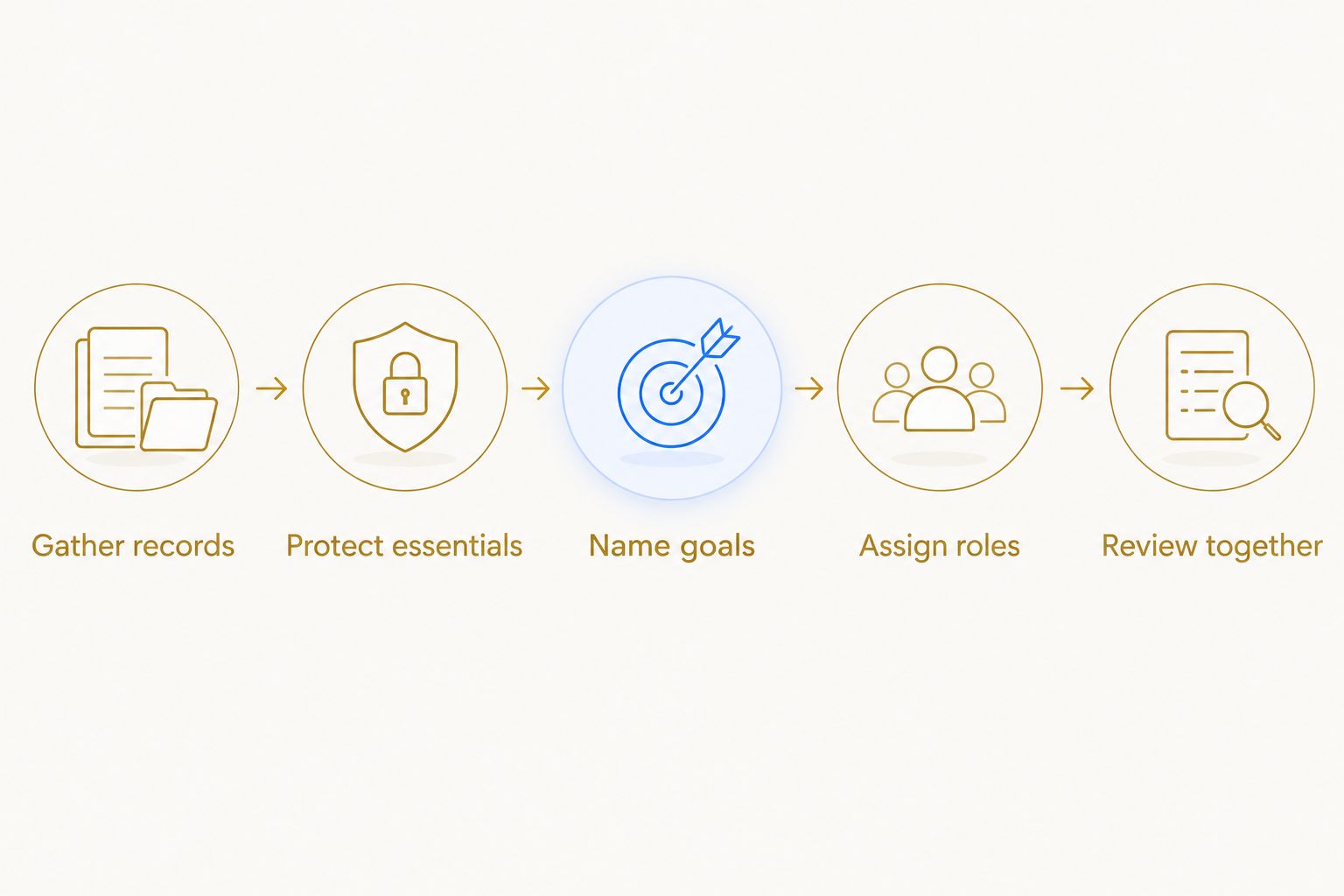
- Gather records. Bring together account statements, bills, debt information, and irregular expenses. Use actual records rather than remembered totals.
- Protect essentials. Identify the obligations your available money must cover before directing money toward longer-term goals.
- Name goals. Choose up to 3 family goals so the budget has a clear purpose beyond reducing spending.
- Assign roles. Decide who reviews transactions, who checks upcoming bills, and how both adults stay informed where applicable.
- Review together. Schedule a 20-minute weekly conversation to correct categories, discuss trade-offs, and agree on the next action.
Keep the conversation practical. If an expense exceeded its category, decide what changes next rather than turning the review into a judgment about someone's character. A budget should make the next decision clearer.
RichMinds connects financial education with family ownership and community legacy. Bring your questions about household money skills, business development, and longer-term priorities, then ask which program fits rather than assuming every family needs the same starting point.
Ask which program fits your family
Discuss your financial education and ownership goals with RichMinds.
Which budgeting app should you choose?
Choose YNAB as the default in 2026 if your household needs a plan for available money. Choose Goodbudget for envelope-based learning, Monarch Money for shared oversight, or Empower Personal Dashboard for net-worth visibility alongside an existing spending routine.
Do not start by maintaining several competing household budgets. Choose one source of truth for spending decisions, assign responsibility for keeping it current, and review whether the information actually changes what your family does.
FAQ
What's the best budgeting app for generational wealth in 2026?
YNAB is this guide's default choice for families who want to assign available income before spending. Goodbudget, Monarch Money, and Empower Personal Dashboard fit different needs: envelope budgeting, shared oversight, and net-worth tracking.
Can a budgeting app create generational wealth?
A budgeting app cannot create generational wealth on its own. It can support deliberate spending and saving, while ownership, debt management, family education, and appropriate legal or financial planning require additional action.
Is YNAB better than Goodbudget for families?
YNAB is the stronger fit for families who want an active available-money allocation method; Goodbudget fits families who prefer digital envelopes. Choose the method your household understands and will maintain.
Which budgeting app is best for couples sharing finances?
Monarch Money is this guide's choice for shared household oversight. Agree on account visibility, spending responsibilities, and review habits before relying on a shared dashboard.
What's the difference between a budget and net worth?
A budget organizes income and spending decisions, while net worth is assets minus liabilities. A family can have valuable assets and still need a better plan for meeting current bills.
Should business owners use a family budgeting app for business records?
A family budgeting app should not replace business bookkeeping. Keep business records distinct and use the household plan to understand the family's obligations and priorities.
How can RichMinds help my family get started?
RichMinds provides financial education, financial consulting, and business development programs with a focus on Black ownership and community legacy. Ask which program fits your family's current questions and goals; do not assume a particular service is included.
One last thing
A rising account balance is not the same as a family knowing how to manage it. During your next 2026 money conversation, ask another adult in the household to explain the budget's main priorities without opening the app.
If that explanation is difficult, simplify the plan before adding more features. Lasting family and community legacies need knowledge that can be shared, not just information stored behind one person's login.
This article provides general education, not personalized investment, legal, or tax advice.